
INTENSIVE CARE / 2018
DILAY KOCOGULLARI - ARTIST STATEMENT:
Heart failure, according to a recent study, is a “global pandemic affecting at
least 26 million people worldwide and is increasing in prevalence.” One of the
biggest challenges is that fully successful treatment requires heart
transplantation of healthy hearts from cadavers, not from living bodies, as is
the case with transplanting all other human organs. Complicating things further,
donors must match numerous physical attributes of the heart recipient – blood
type, tissue characteristics, weight, age. Moreover, even those patients for
whom matches are found, the prognosis is not always favorable. Given these
difficulties, it is not surprising, perhaps, that it is dramatically harder to
find donor hearts for babies. Infants who are healthy have a very low mortality
rate – at least in developed nations – and the hearts of those who are unhealthy
are unusable.
I learned these facts while researching treatments for heart failure, a topic I
felt prompted to undertake because of the high incidence of heart disease in my
own family (my father recently underwent successful open heart surgery in
October, performed by my uncle, who is a cardiac surgeon). It was while
conducting research at a hospital in Istanbul that I first encountered intensive
care units (ICUs) for babies with heart failure. I was shocked by what I saw and
by what I felt – fear, desperation, and anxiety. Here were tiny new human beings,
whose freshness in the world usually connotes hope for a bright future, but
almost all of them would not exist in the world for more than one year. I saw
not only how these baby patients were in far more dire circumstances than adult
cardiac patients, but how the hopes of the infants’ families, unlike my own for
my father and other adult family members, were so minimal. I knew I wanted to
pursue these research findings and personal feelings in my work.
As a heart patient in ICU, a baby is attached to 7 different machines to keep
them alive. As I continued my research at the hospital, I recorded the sounds of
these 7 machines, each of which serves a different purpose. For example, one is
used for feeding, another for heartbeat monitoring, another for measuring body
temperature (some of these provide ambient sound in my installation). The
purpose of the machines is to keep the babies alive, but the doctors, nurses,
and parents know that the vast majority of the infants will not survive,
regardless of what is done for them. Their day-to-day experience of heart
disease, which most of us rarely think about in our day-to-day lives, means
waiting for death.
In addition to pointing to this futility, I wish to point to feelings of hope,
minimal but real, through the symbolism of the olive pit – or seed, as we call
it in Turkish. In Turkey, olive seeds symbolize infancy (both the seeds and
babies’ hearts are small and fragile, but they are expected to grow to full
size), as well as immortality and endurance (many olive trees live for over 400
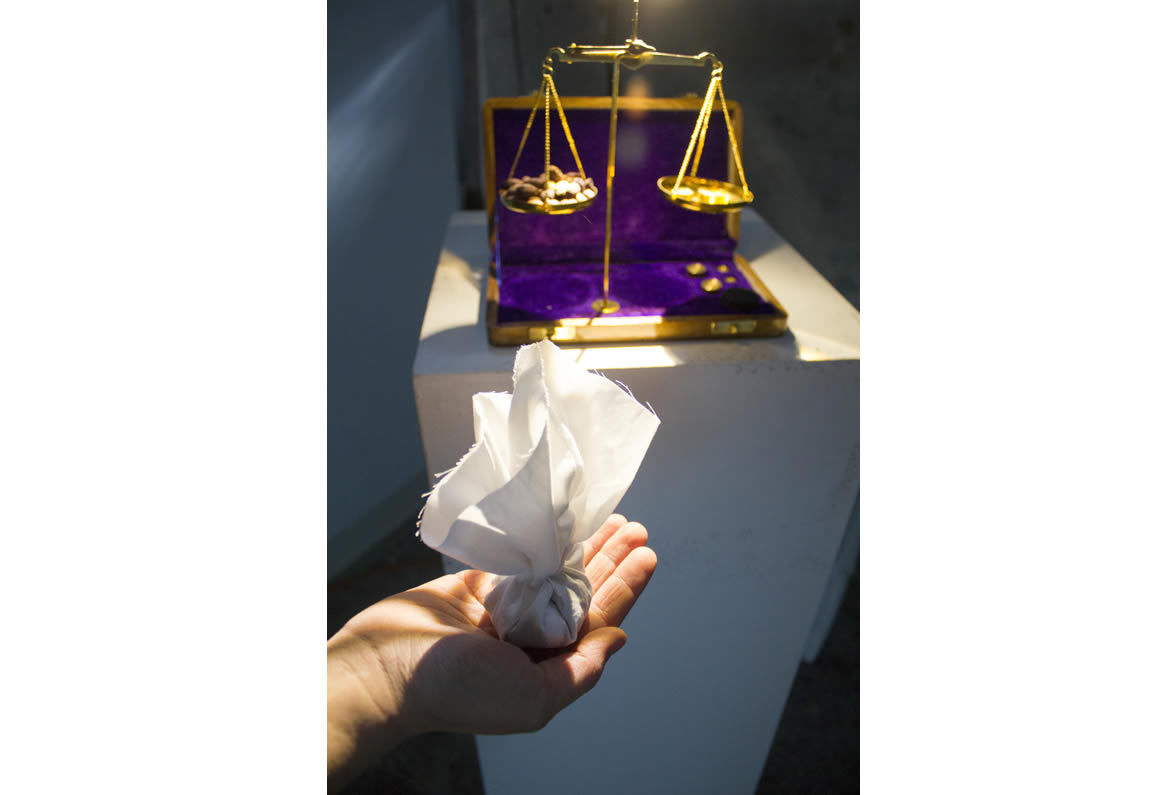
years, but most babies with heart disease live for only 1). A baby’s heart
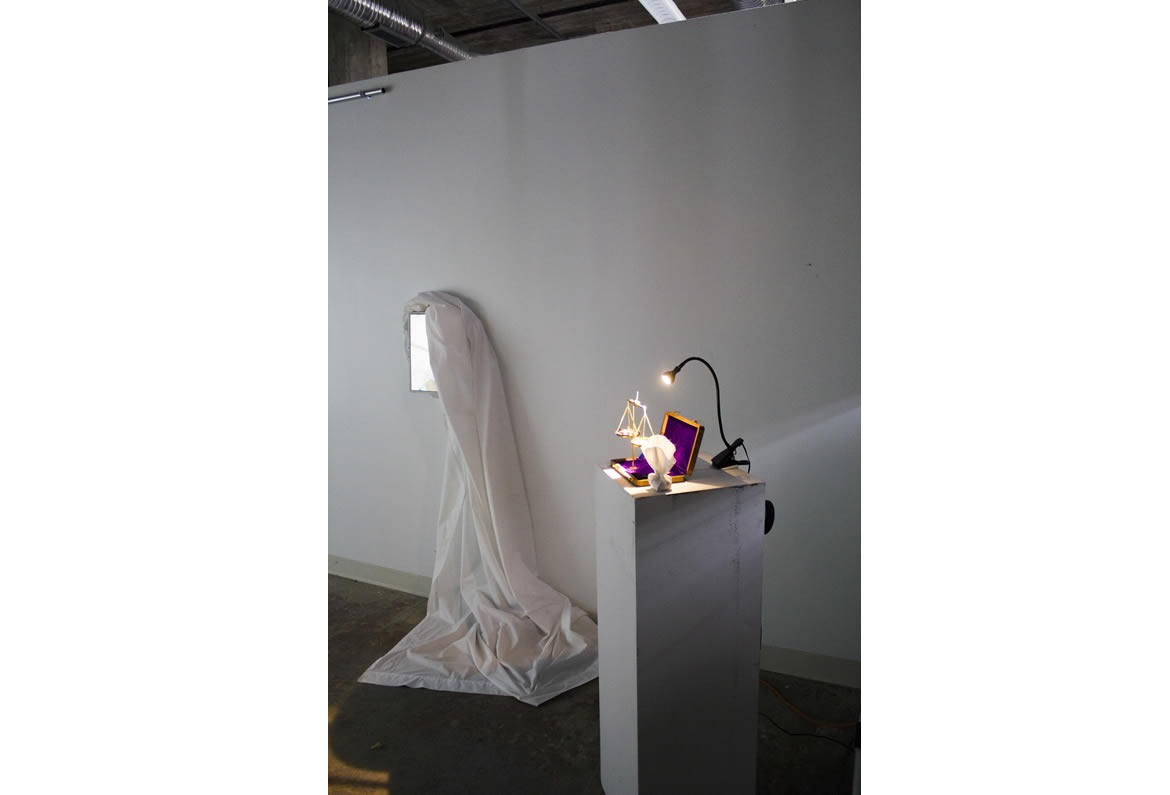
weighs approximately 25 grams. The scales in my installation, on whichI’ve placed
25 grams of olive seeds, evoke just how much hangs in
the balance for those dealing with in fan the art disease. Observers of
this installation are encouraged to take 25 grams of
olive seeds in to their hands to feel the weight of a baby’s heart.
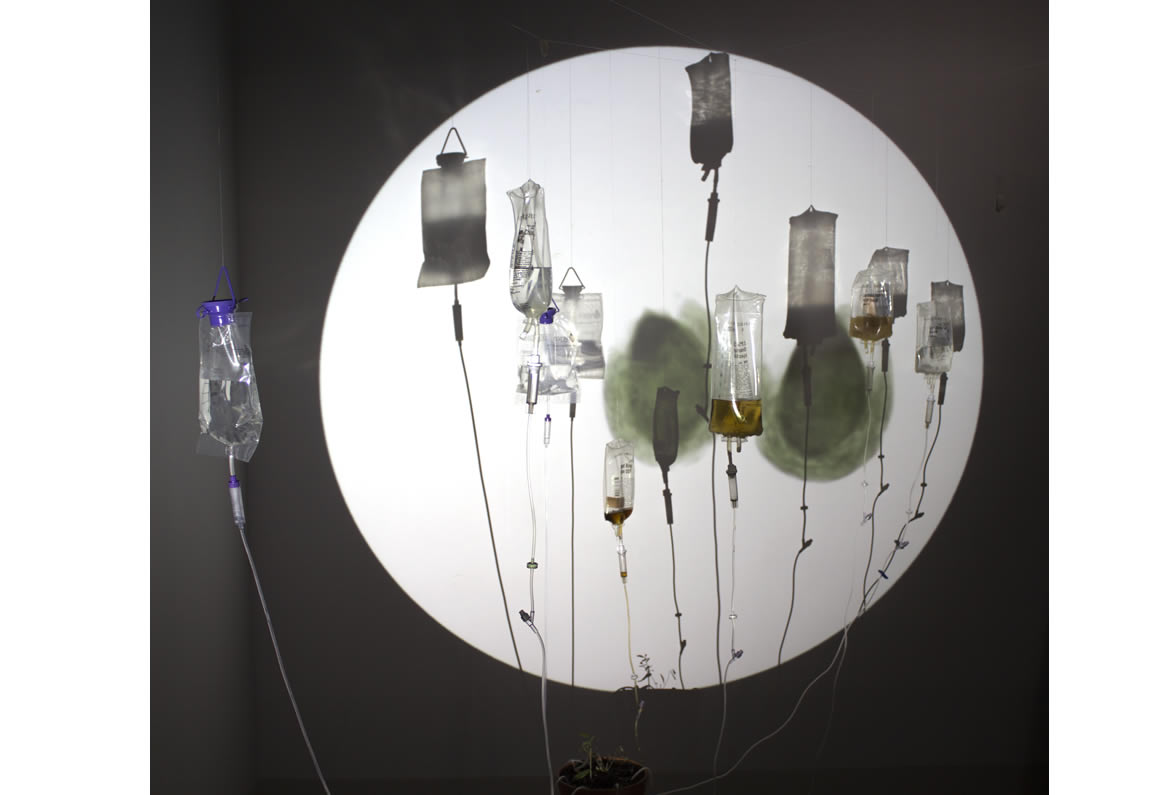
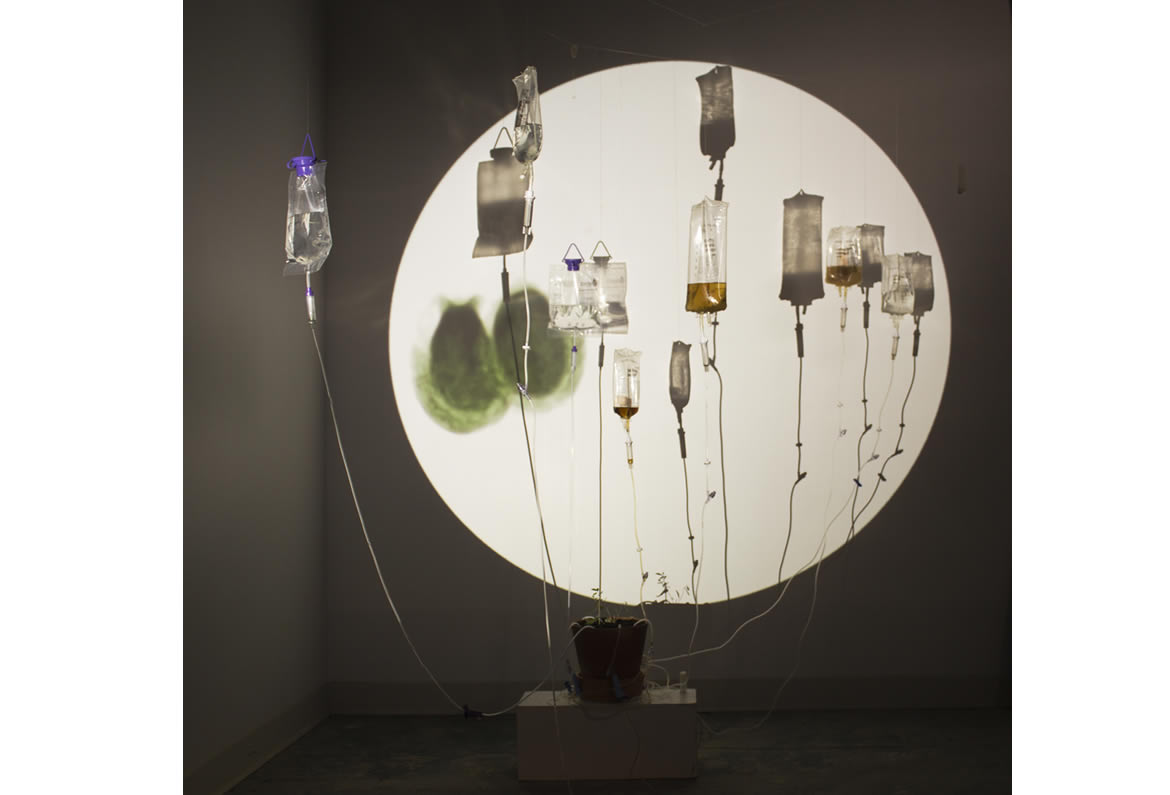
As part of my research at the hospital, I arranged for an MRI video to be taken
of an olive that could serve as a metaphor for the life of a baby. In one
installation, I project this video in a circle of light, the circular shape
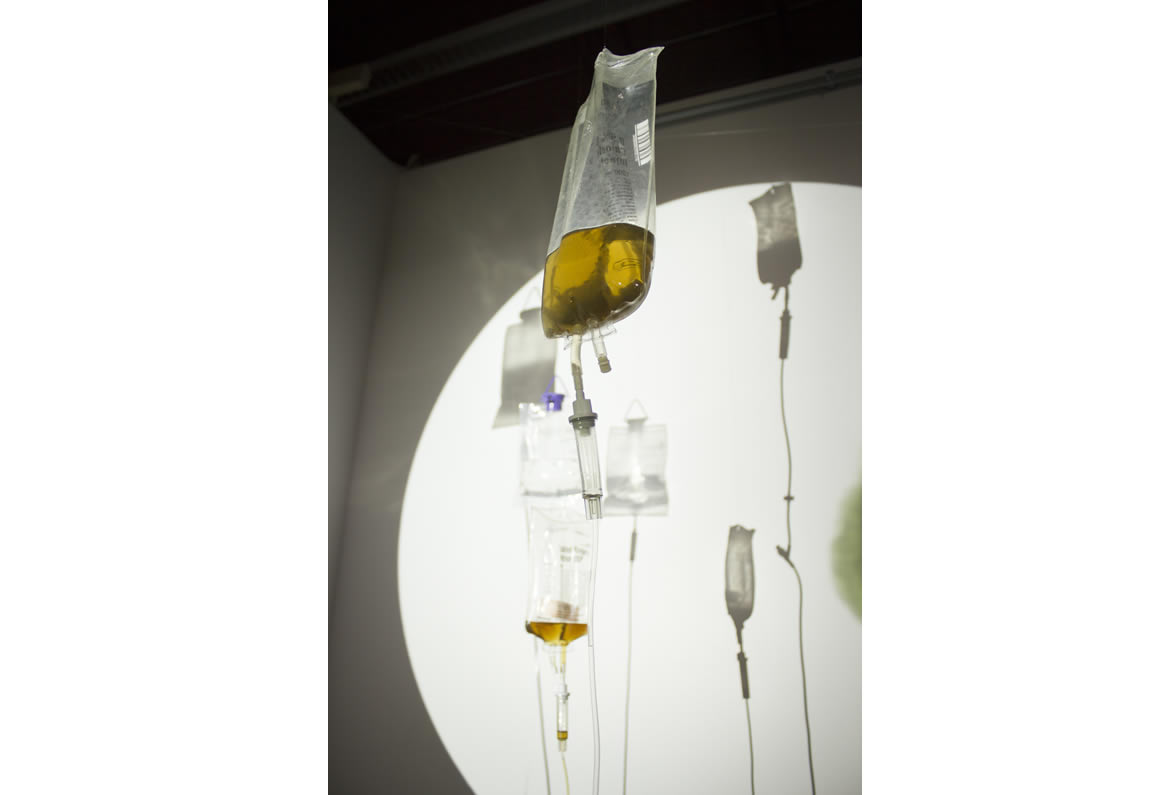
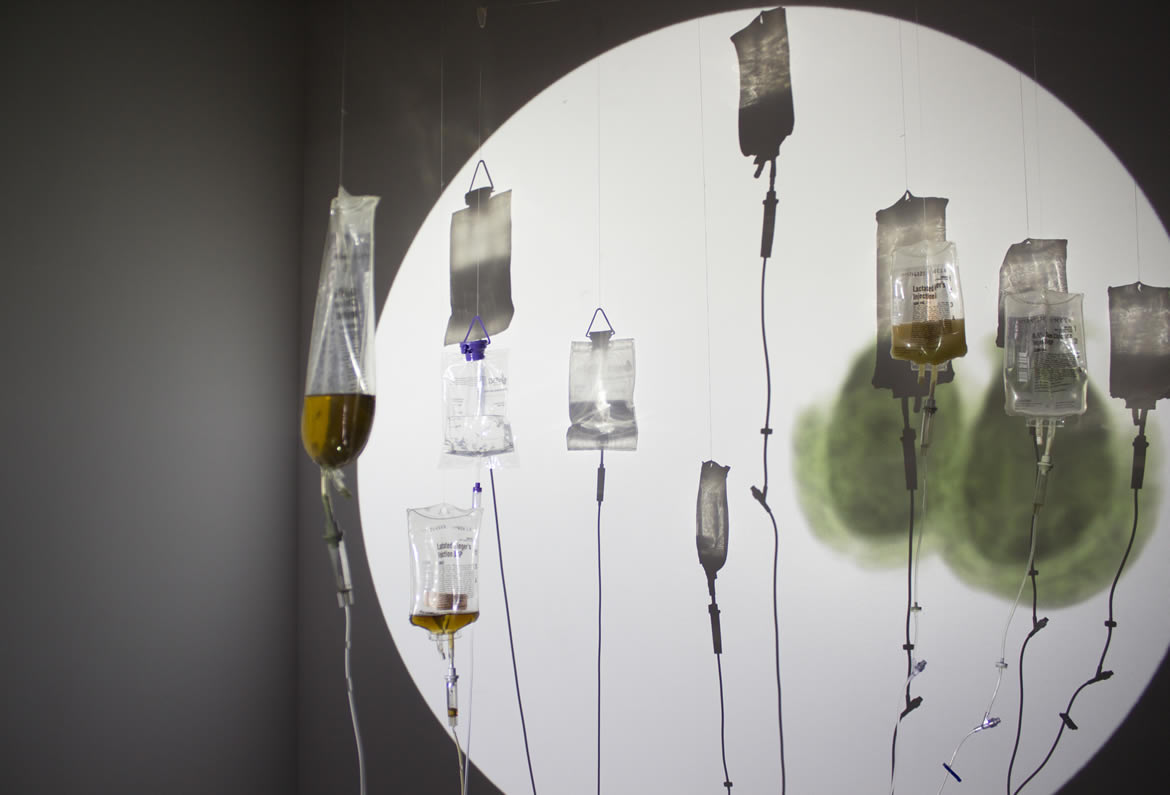
suggesting that of an image seen through a microscope. I used seven IV bags to
draw attention to the same number of machines that it takes to support the lives
of babies with heart failure. As each bag represents a different machine used
for life support, I added to the bags some food, some water, and other liquids
to support the life of the small olive tree at the base of the projection.
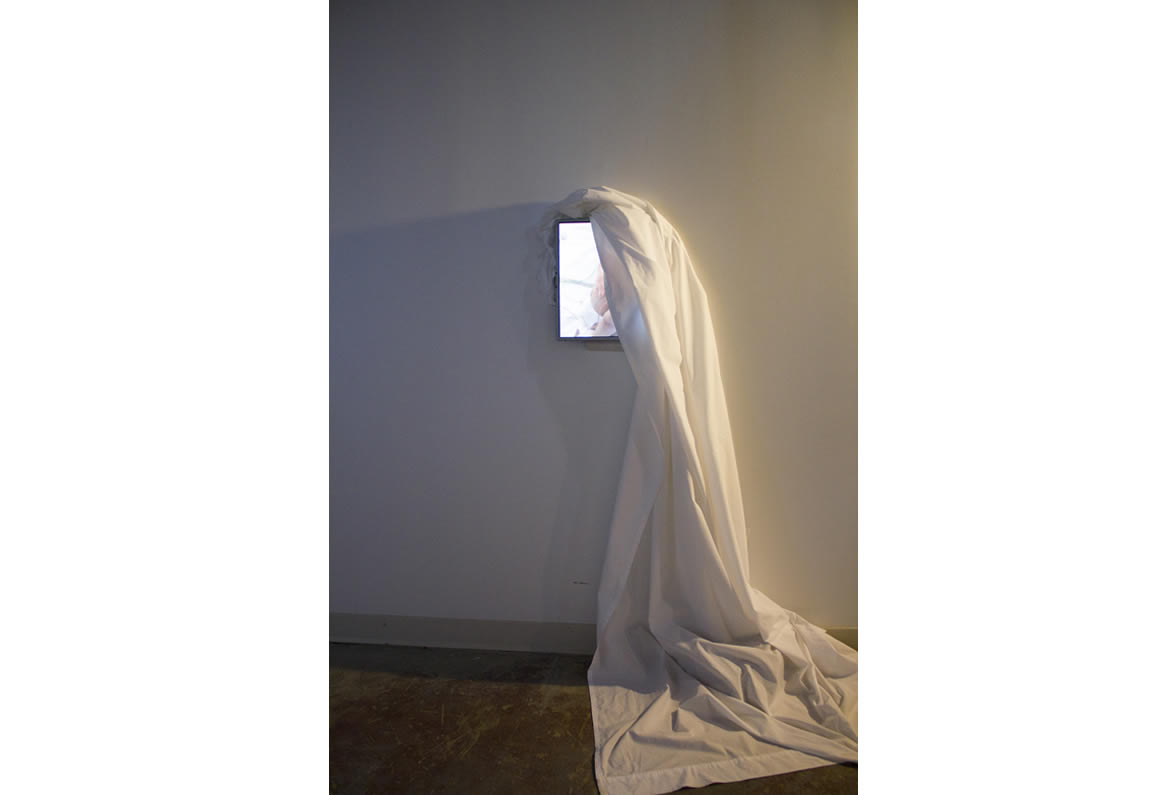
Babies with heart disease have great difficulty breathing after the surgeries
they undergo, but their parents can help them take a breath. In another
installation, viewers can watch and hear one of the family members repeatedly
hitting the back of a baby very hard. What at first looks and sounds like
physical abuse is precisely the opposite, as it may be the only hope for the
baby to keep breathing.In order to make this video more sculptural, and thus
part of our everyday three-dimensional world, I chose to cover it with a
bed sheet.
Gianluigi Savares and Lars H. Lun, “Global Public Health Burden of Heart Failure,” Cardiac Failure Review 3(1): April 2017: 7–11. https://www.ncbi.nlm.nih.gov/pmc/articles/PMC5494150/